
The 2022-2023 Toyota Tundra Engine Recall and What It Means
Toyota has an unmatched reputation for building reliable vehicles that provide dependable service for hundreds of thousands of miles. Just about every list of the most reliable automotive brands will have Toyota listed near, if not at, the very top. That’s why when news of a major Toyota recall hits the presses, it tends to have an outsized effect on car shoppers and can cause more concern than a similar recall would if it came from a lesser brand. Every manufacturer issues recalls from time to time, but most of them go unnoticed because it’s just expected of them.
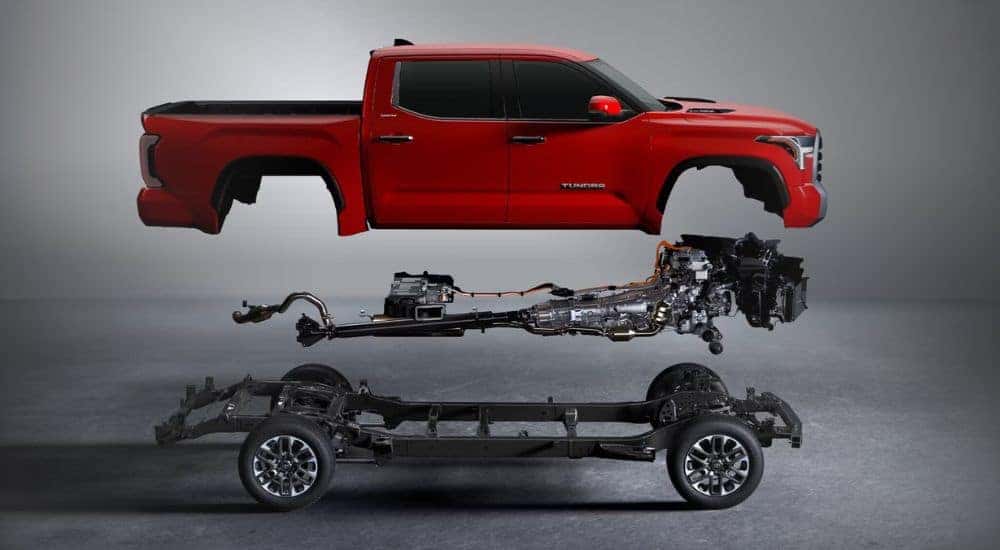
The recent recall of the Toyota Tundra for manufacturing defects in its new 3.4L twin-turbocharged V6 engine is an example of this phenomenon, and a lot of drivers want to know what this recall means for them. Is the new Tundra an unreliable truck that they should stay away from? Not at all. Recalls are a fact of life in the automotive industry, even for Toyota, and the Tundra engine recall has seen Toyota go above and beyond to get out in front of the problem before it could become a major issue for drivers. Only early production of the new engine was affected by the issue, meaning the new Toyota Tundra for sale that you will find on our lot today were produced after the problems were identified and resolved, and Toyota is doing everything possible to take care of the drivers who have experienced it.
What Models Are Affected?
Toyota has recalled a total of 98,568 Tundras powered by the new 3.4L turbocharged V6 engine. At first glance, that is a lot of trucks, but it is only a fraction of the Tundras produced. It is important to note that this recall only affects 2022 and 2023 model-year trucks produced between November 2021 and February 2023––the very first year of production for the new generation. Virtually all of the trucks produced during this window have already been sold, and we no longer have any in our new inventory. If you are looking at one of the new 2024 or 2025 Tundras currently on our lot, then you can keep shopping, knowing that these models are not part of the recall as they were produced after the issues were resolved.
Even if you are thinking about picking up a lightly used 2022 or 2023 Tundra (or currently own one of these vehicles), there is a good chance that it is not affected by the recall. Toyota produced nearly 230,000 Tundras through 2022 and 2023, and fewer than 100,000 fell under the recall. Further, the recall only covers the base i-FORCE engine––the i-FORCE MAX hybrid variant is not affected. While both the i-FORCE and i-FORCE MAX engines share the same basic architecture, the hybrid variant is substantially different in several key ways and has not exhibited the same manufacturing defect found in the standard version of the engine. This is also why the Toyota Sequoia, which is powered exclusively by the i-FORCE MAX hybrid engine, is not part of the Tundra recall.
Is This an Engineering Problem?
The V8 engines that powered the Tundra for over two decades are a known quality, so news of a major recall soon after the new 3.4L turbocharged V6 engine hit the market has caused some rumors that there is a fundamental problem with the new engine. This is not the case. Every Toyota engine undergoes extensive reliability testing before it is approved for production, and the “new” 3.4L turbocharged V6 engine has actually been available since the 2018 model year in the Lexus LS 500 full-size sedan. After having been in production for seven years at this point, the 3.4L V6 is a proven performer that can be counted on to serve dependably, just like any other Toyota engine.
The cause of the recall was machining debris left in the engines during the production process, which was not a fundamental issue with the engine design. This debris can damage the engine crankshaft bearings, causing problems with the engine. Toyota implemented new engine cleaning processes at its Huntsville, Alabama, engine production facility in December 2022, which resolved the issue without any need to redesign parts of the engine. Because of the nature of the problem, it is difficult to quantify exactly how many engines are affected, although it does not appear to be widespread. While Toyota has implemented a blanket recall of Tundras produced from November 2021 to February 2023, as of its May 30th, 2024 filing with the NHTSA, it has only identified 824 engine warranty claims across the Tundra and Lexus LX.
How Is Toyota Handling the Recall?
While only a small fraction of the recalled engines will ever display any issues, Toyota wants to ensure that every one of its customers is taken care of. If you have a 2022 to 2023 Tundra that has been identified as possibly being affected by the manufacturing defect, then Toyota will replace the entire engine for free. By replacing the entire engine rather than simply the damaged parts, Toyota is ensuring that there will be no future issues and that its trucks will continue to live up to the reputation for longevity that it has established over the years.
If you have a 2022 to 2023 Tundra that is affected, then Toyota should have sent you a recall notice prior to July 29th, 2024. If you have not received one and are concerned that your truck may be affected, please reach out to our service department and let us help you determine whether your truck is a part of the recall. Toyota also has an online recall lookup tool that you can use to see whether your truck may be affected. If your truck is covered by the recall, then our service department will help you schedule an appointment to ensure that the proper repairs are performed as soon as possible.

Toyota Stands By Its Vehicles
A recall for a major engine defect is not something that any manufacturer ever wants to issue, and many manufacturers go out of their way to avoid sending official recalls even after it is clear that there are mechanical problems with their vehicles. Toyota’s response to the Tundra recall shows that it is a company that is dedicated to doing the right thing. While recalling nearly 100,000 trucks and replacing entire engines is an expensive solution that has caused a lot of rumors to fly, the end result is that drivers can trust Toyota’s reputation for building reliable vehicles and standing by its products when something goes wrong.
While our service department stands ready to help if you own a 2022 to 2023 Tundra that has been affected by the recall, if you are looking for a new truck, you can shop for a new 2024 or 2025 Toyota Tundra without worry, knowing that you will be able to enjoy a powerful and dependable pickup that is not affected by the recall. Despite the early production hiccups, the new i-FORCE and i-FORCE MAX turbocharged engines are a real highlight of the modern Tundra, providing incredible torque and remarkable fuel efficiency for a full-size truck. All it takes is one test drive, and we’re sure you’ll agree that it is a real step up from the old V8 and other engines available on the market.

0 comment(s) so far on The 2022-2023 Toyota Tundra Engine Recall and What It Means